The Science of Waterless Diffusion: Why Nebulizers Are Better for Indoor Air Quality
In the United States, choosing a diffuser for your home is easy. You can pick a waterless scent diffuser that uses oil only or an ultrasonic unit that mixes oil and water into mist. Both can make your room smell fresh, but they differ in daily use. If you value strong scent, easy use, and less hassle, a Waterless Scent Diffuser is often the better choice.
Essential oil diffusers aim to spread fragrance into the air as tiny particles. This makes your space smell better and supports aromatherapy. A Nebulizing Diffuser breaks undiluted essential oils into a fine, dry plume. It doesn't need water, so you get a stronger scent right away.

Practicality is key in real homes. A Mold-free Diffuser means no standing water to worry about. This makes it easier to avoid mold or bacteria. Plus, cleaning is less often needed because there's no water to deal with.
Performance is important, too, in open layouts. Waterless diffusers can reach the same scent intensity with fewer drops. This keeps the aroma crisp. While water-based diffusers are good for added humidity and softer scents, waterless diffusion is more direct and efficient for a bold result.
What a waterless diffuser is and how cold diffusion works
A waterless scent diffuser doesn't need a tank or measuring. It uses undiluted essential oils to send fragrance into the air. This makes the scent cleaner and more direct.

Definition: waterless scenting with no water tank and no dilution
It's simple: just add oil and turn it on. No need to fill a water line or guess the right mix. This method is chosen for its consistent strength and ease of use.
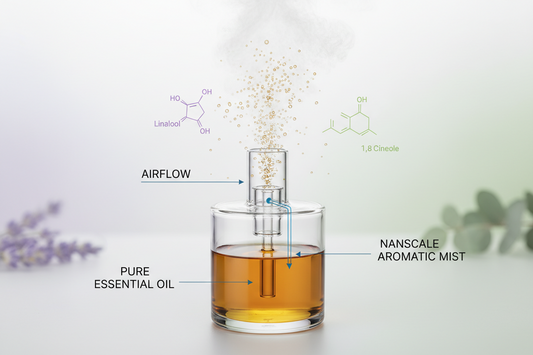
How a nebulizing diffuser atomizes oils into microscopic particles
Nebulizing diffusers use special engineering to break oil into tiny particles. This creates a fine vapor that spreads the scent evenly.
Charabanc Fragrances uses Bernoulli’s Principle to move oil through a special glass. This keeps the oil's scent true without water.
Heat-free essential oil diffuser benefits for aroma quality and oil performance
A heat-free diffuser doesn't warm the oil. This is good because heat can change how scents smell. Fans of pure aroma tech like this method for a scent that stays true.
- Truer top notes that don't smell “cooked”
- More predictable intensity from undiluted essential oils
- Less residue risk from evaporated water minerals
How water-based ultrasonic diffusers differ by mixing oil with water into a mist
Ultrasonic diffusers work by creating a cool mist. This mist carries oil droplets, making the scent softer. It also adds moisture to the air, which is nice when it's dry.
Using one means more steps: fill the tank, add oil, and adjust settings. Waterless diffusers are chosen for their fast, strong scent. Ultrasonic diffusers are for a softer, more gentle scent.
Waterless Scent Diffuser, Nebulizing Diffuser, Mold-free Diffuser
A Waterless Scent Diffuser offers fragrance that's clear, fast, and consistent. It doesn't need a tank refill, making it easy to clean. It's also mold-free, as there's no standing water.

More potent aroma and longer-lasting scent presence from undiluted essential oils
Using undiluted essential oils, a waterless diffuser gives a stronger scent with less oil. The fragrance hits you faster and lasts longer. This makes it efficient for daily use.
Purity and “true-to-nature” aromatic profiles with pure nebulization (no water, no heat)
Pure nebulization means no water and no heat. This keeps the oil's true scent intact. Delicate blends stay true to their original smell. It's all about clean diffusion without losing the oil's essence.
Better fit for large rooms and open-concept spaces due to concentrated scent delivery
In big rooms or open spaces, a Nebulizing Diffuser spreads scent far. It's perfect for places where looks matter, yet delivers strong fragrance. The scent stays even across the room, without fading fast.
Why dilution in water-based units can lead to a gentler (weaker) fragrance output
Ultrasonic diffusers mix water and oil into mist, making the scent softer. You might need more drops to get the same strength. Waterless options, on the other hand, aim for intensity and clarity.
Health, safety, and indoor air quality advantages in everyday use
Enjoying scents should be easy, not a hassle. A waterless system keeps air clean and makes checking simple.
Why removing standing water reduces mold and bacterial growth risk
Standing water is a problem. Microbes grow fast in it, worse if not cleaned after a few hours.
A mold-free diffuser avoids water, so no damp reservoir to worry about. This design choice cuts down mold and bacteria risk.
Potential indoor air quality upside: dispersing pure essential oils without added humidity
Waterless diffusion spreads oils without adding humidity. This is a big plus in moist homes.
Some oils, like tea tree and eucalyptus, fight microbes well. Used right, they can be fresher than misty diffusers.
Material considerations: avoiding plastic reservoirs and reducing petrochemical leaching concerns
Materials are key with oils. Plastic tanks in water units can leach chemicals, like BPA, when heated.
Choosing glass and wood fits a plastic-free lifestyle. These materials cut down on off-gassing and smells.
Common-sense use notes for sensitive households (ventilation, duration, and intensity control)
Waterless diffusers can be strong. Use them lightly. Keep sessions short and adjust intensity. Open a window for air.
- Start low and increase slowly, in small rooms.
- Watch for reactions from kids, guests, and pets. Stop if they seem upset.
It's good to compare risks. Ceramic candle diffusers have a flame risk. An electric waterless diffuser avoids this while providing a clean scent.
Lower maintenance and “set-it-and-forget-it” home scenting
Busy homes don’t need another chore. Waterless models offer set-it-and-forget-it home scenting. They have fewer steps and less mess than mist-based units. This feels like hassle-free luxury, perfect for busy routines.
Zero maintenance home scenting basics
Zero maintenance home scenting means no tank to fill and no water-to-oil math. Just add oil and start diffusion. This supports a true zero maintenance rhythm on hectic days.
This simplicity is practical. Fewer handling steps mean fewer spills and less measuring. It makes starting each time you want scent in the air smoother.
Cleaning frequency comparison
Many waterless systems are easy to clean, often on a monthly schedule. In contrast, water-based diffusers are cleaned weekly to prevent residue and microbial buildup.
Waterless units usually don’t need immediate post-use rinsing. This makes the “plug in and enjoy” feeling real.
Easier scent switching
Switching aromas is faster with waterless diffusion. There’s no leftover water to dilute the next blend. This makes quick transitions between essential oils and fragrance oils more realistic, even when changing the vibe room by room.
One caution matters for performance: avoid carrier oils like jojoba, coconut, or almond. Thicker oils can clog the mechanism and work against longevity.
Charabanc Fragrances: sustainable luxury decor meets pure aroma tech
Charabanc Fragrances was born in London, where tradition and care are key. It draws inspiration from the vintage charabanc, a symbol of calm journeys. This philosophy brings wabi-sabi elegance to our homes, embracing the beauty of real life.
The brand focuses on pure aroma tech, using precision-crafted waterless diffusers. These diffusers use cold diffusion, eliminating the need for water tanks. This method ensures a strong scent that lasts, perfect for bigger spaces.
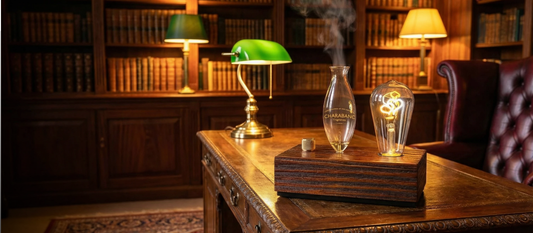
Charabanc Fragrances values honest materials, aiming for a plastic-free design. The diffusers are made from hand-blown glass and solid European balsam wood. This makes them not just functional but also beautiful, lasting pieces.
This approach to sustainable luxury decor is both practical and stylish. It means fewer refills and easier cleaning, with a consistent scent. Charabanc Fragrances stands out in modern homes, blending beauty with functionality.
FAQ
What do essential oil diffusers actually do?
Essential oil diffusers spread scents through the air. They use ultrasonic, nebulizing, or other methods to create tiny particles. This makes the scent even and enjoyable.
How is a waterless scent diffuser different from a water-based ultrasonic diffuser?
Waterless diffusers use no water and spread pure essential oils. This makes the scent stronger. Ultrasonic diffusers mix oil with water and create a mist. They offer a milder scent and add moisture to the air.
What is the definition of “waterless” (no tank, no dilution) diffusion?
“Waterless” means no water is used. The diffuser spreads oils in their pure form. This avoids dilution and keeps the scent strong.
How does a nebulizing diffuser work?
A nebulizing diffuser breaks down essential oils into tiny particles. It spreads these particles into the air. This creates a strong, room-filling scent without water.
Why does a heat-free essential oil diffuser matter for aroma quality?
Heat can change the scent and properties of essential oils. Heat-free diffusers preserve the true scent and benefits of oils. They keep the diffusion cool and dry.
How does an ultrasonic diffuser differ in everyday use?
Ultrasonic diffusers create a fine mist from water and oil. The scent is milder, and it adds moisture. Users need to refill the tank and clean it regularly.
Why do many U.S. households prefer waterless diffusion at home?
Many homes like the stronger scent and ease of use of waterless diffusers. They offer a concentrated aroma and are easy to clean. This makes them a popular choice.
Will a waterless diffuser make the scent stronger and longer-lasting?
Yes, often. Waterless diffusers spread undiluted oils, making the scent stronger and lasting longer. Users need fewer drops to achieve a similar scent intensity.
Does waterless diffusion preserve “molecular integrity” and a true-to-nature aroma?
Yes, waterless diffusion is designed to keep the oil's scent intact. It avoids water and heat, preserving the natural aroma of the oil.
Are waterless diffusers better for large rooms and open-concept spaces?
Yes, waterless diffusers are great for large spaces. They deliver a concentrated scent that fills rooms quickly. They are designed to scent large areas evenly.
Why can dilution in water-based units lead to a gentler (weaker) fragrance?
Water-based diffusers mix oil with water, making the scent softer. To strengthen the scent, users add more drops or run the unit longer. Ceramic candle diffusers are even weaker due to slow evaporation.
Does removing standing water really reduce mold and bacteria risk?
Yes, removing standing water reduces mold and bacteria risk. Water-based diffusers can become breeding grounds for microbes if not cleaned regularly. It's important to clean them, even if unused for a short time.
Can a waterless diffuser help indoor air comfort by not adding humidity?
Yes, waterless diffusers don't add moisture to the air. This makes them a good choice for homes that don't want extra humidity. They also support a cleaner environment by dispersing undiluted oils.
What about plastics—should I worry about a plastic water tank and petrochemical leaching?
Yes, some plastics can leach chemicals, including BPA. Waterless diffusers often use glass or wood, avoiding these concerns. This makes them a safer choice for home use.
Are waterless diffusers safer than ceramic candle diffusers?
Yes, waterless diffusers are safer. They don't have an open flame, reducing fire risks. This makes them a safer choice for home use.
What common-sense guidance should sensitive households follow?
Start with short sessions and adjust intensity if needed. Monitor how people and pets react. Open a window if necessary. Always consult a healthcare provider before using essential oils, during pregnancy, breastfeeding, or for children or pets.
What does “zero maintenance home scenting” really mean in daily life?
It means fewer steps and less mess. Waterless diffusers don't need daily refills or water-to-oil ratios. Just add oil and start. This makes them hassle-free.
How often do I need to clean a waterless diffuser versus a water-based diffuser?
Waterless diffusers usually need monthly cleaning. Water-based diffusers need weekly cleaning to prevent buildup. Waterless diffusers have less residue and fewer wet parts, making them easier to maintain.
Is it easier to switch scents with a waterless diffuser?
Yes, often. Waterless diffusers allow quick scent changes without the need to empty and re-mix a tank. Avoid using thick oils like jojoba or coconut to prevent clogging.
How long should a quality diffuser last?
Quality diffusers should last 3–5 years with proper care. Waterless diffusers are often seen as lasting longer due to fewer parts exposed to water. Some designs offer replaceable glass reservoirs for easy cleaning.
Are waterless diffusers more efficient or eco-friendlier?
Many brands say waterless diffusers are more efficient. They can achieve the same scent intensity with fewer drops. This reduces water use and maintenance waste, making them eco-friendly.
What is Charabanc Fragrances, and what does it stand for?
Charabanc Fragrances combines British heritage with modern living. It's inspired by the vintage charabanc coach, symbolizing shared journeys. Its philosophy focuses on serenity, presence, and creating a personal atmosphere.
How does Charabanc connect design, sustainability, and performance?
Charabanc uses precision-crafted waterless diffusers for a pure scent experience. It focuses on honest materials, plastic-free design, and sustainable luxury. This creates a long-lasting, elegant product.
What materials define the Charabanc aesthetic—glass and wood, or something else?
Charabanc uses hand-blown glass and solid European balsam wood. This design is rooted in British heritage and is built for longevity. It looks great on a bookshelf or sideboard.
Is a Charabanc diffuser meant to be mold-free and truly zero maintenance?
Yes, Charabanc diffusers aim to be mold-free by avoiding standing water. While no device is completely maintenance-free, waterless diffusion is positioned as zero maintenance. It requires no daily refills and less cleaning than ultrasonic units.
What is the Charabanc Fragrances philosophy in plain terms?
Charabanc Fragrances believes home scenting should be calming, not a chore. It uses non-ultrasonic engineering and pure aroma tech. It values materials, longevity, and sustainable luxury, focusing on what's not added, like plastic and constant upkeep.